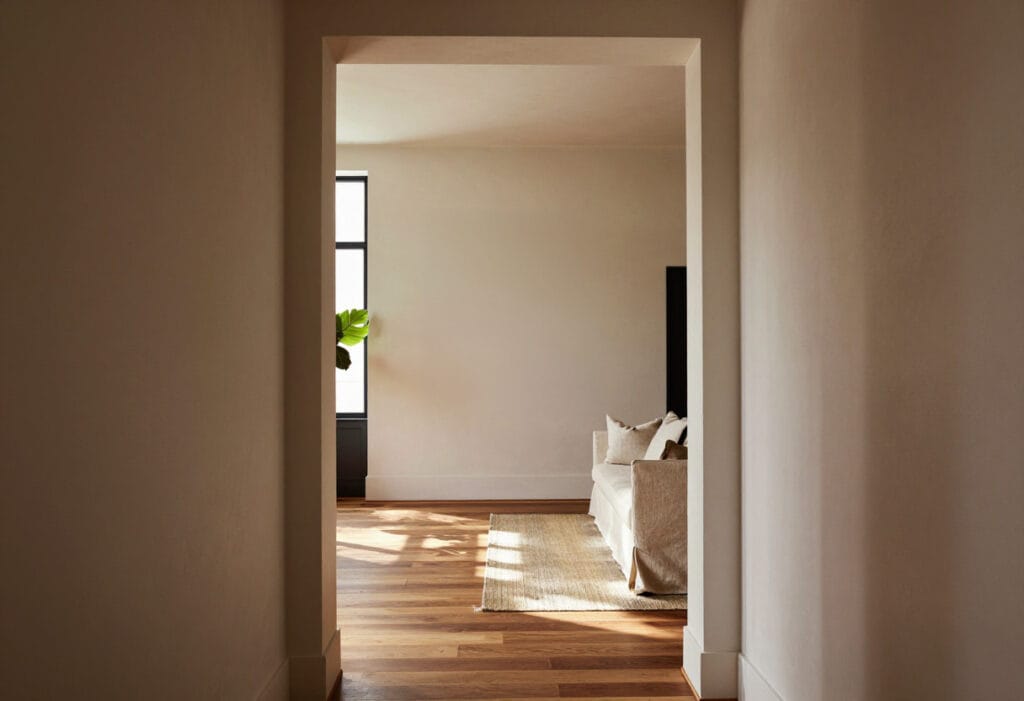
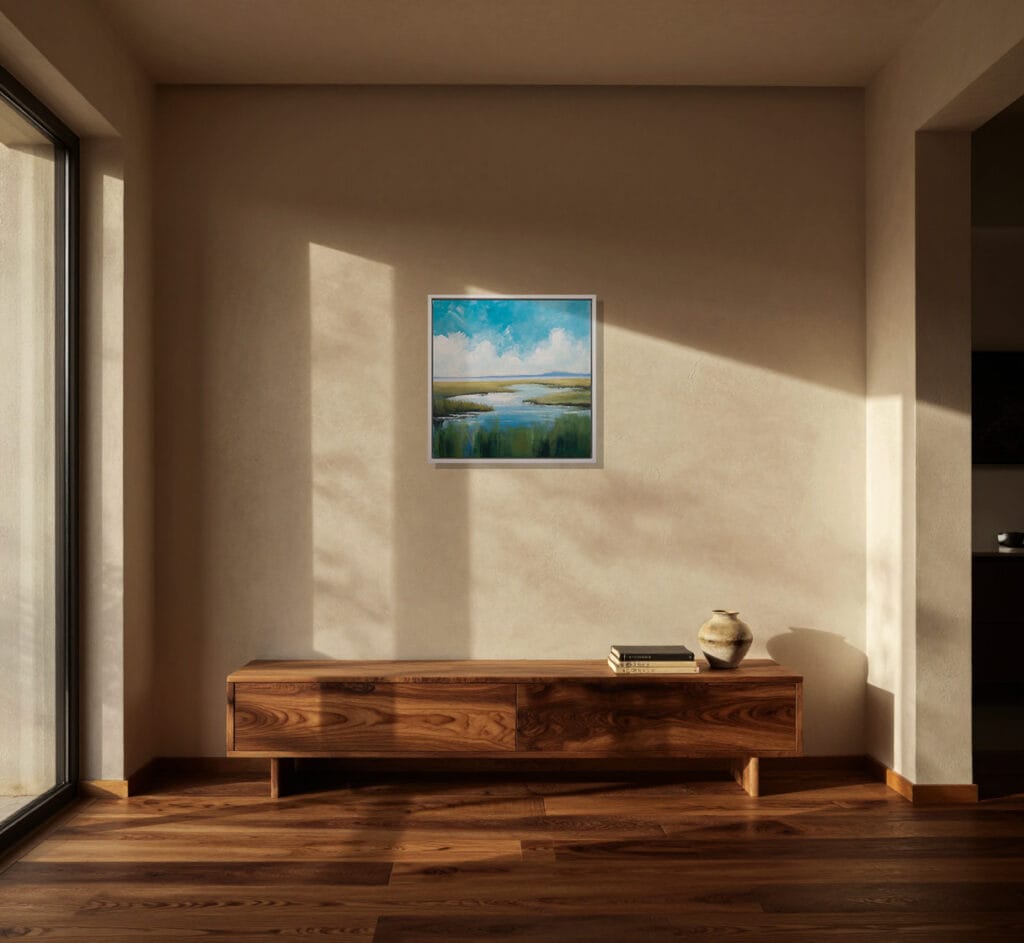
The wall of arrival.
The wall your body finds before your eyes do sets the temperature of the house.
Before a room is understood, it is felt.
The first wall gives the room its first sentence.
You enter. You slow down. Your shoulders either release or remain alert. Your eyes may still be adjusting to the light, but your body has already begun to read the room.
This first reading rarely begins with the sofa, the rug, or even the artwork itself.
It begins with the wall that receives you.
Not always the largest wall. Not always the most obvious one. Not always the one directly in front of the door.
The wall of arrival is the first surface that gathers your attention when you cross the threshold. It is the wall that tells the body where it has arrived, what kind of space this is, and whether the room is asking for movement, rest, conversation, or pause.
In many homes, this wall is treated by accident. A console is placed there because it fits. A picture is hung there because the nail was already in the wall. A mirror is added because the space felt empty.
But when this wall is chosen with care, the entire room begins differently.


The first wall does not need to impress. It needs to orient.
A room becomes calmer when the first wall gives the eye a place to land.
This does not mean the wall must be filled. It does not mean it needs a large artwork, a dramatic mirror, or a styled console. Sometimes the right decision is one quiet piece. Sometimes it is a single object below it. Sometimes it is leaving more space than you expected.
The wall of arrival works best when it answers three silent questions:
Where am I?
What is the mood of this room?
Where should my attention rest first?
If the wall is too empty, the room may feel unresolved.
If it is too busy, the room may feel anxious before anyone has even sat down.
If it carries the wrong object, the space may feel decorated but not grounded.
Stand at the entrance and notice what the body already knows.
The wall of arrival is not only visual. It is emotional architecture.
It decides whether the room greets you, distracts you, or leaves you searching.
Stand outside the room before you change anything.
Before choosing art, furniture, or styling, let the room tell you where its first point of calm should be. These five quiet steps help you read the wall of arrival with greater clarity.
Pause at the doorway.
Do not enter fully yet. Stand as if you were visiting the room for the first time. Let your eyes soften. Do not look for what is missing. Do not judge the furniture.
Notice where your attention lands.
Ask yourself: what wall receives me first? The answer may not be the biggest wall. It may be the quiet surface that gathers the room before anything else does.
Imagine the wall quiet.
Take everything off that wall in your mind. Imagine it with only one piece. Imagine it with a small object below. Imagine it with nothing but light.
Choose the feeling first.
Should this wall make the room feel calmer, more open, more intimate, more grounded, more personal, or more refined? Let the feeling lead the object.
Place only what supports that feeling.
A piece of art can work beautifully here, but only if it gives the room a beginning. A mirror can work, but only if it reflects something worth doubling. A console can work, but only if it does not become a place for visual noise.
Walk out. Walk back in. If your body relaxes before your mind explains why, the wall is working.
The wall of arrival is not about decoration. It is about welcome.
It is the first agreement between the home and the person entering it. It tells the body, quietly, that it may slow down. It tells the eye where to rest. It gives the room a first sentence. A home does not become a refuge because every wall is filled. It becomes a refuge when the first wall knows how to receive you.
Images sourced from Pexels and edited for the Bonum Studio editorial experience.