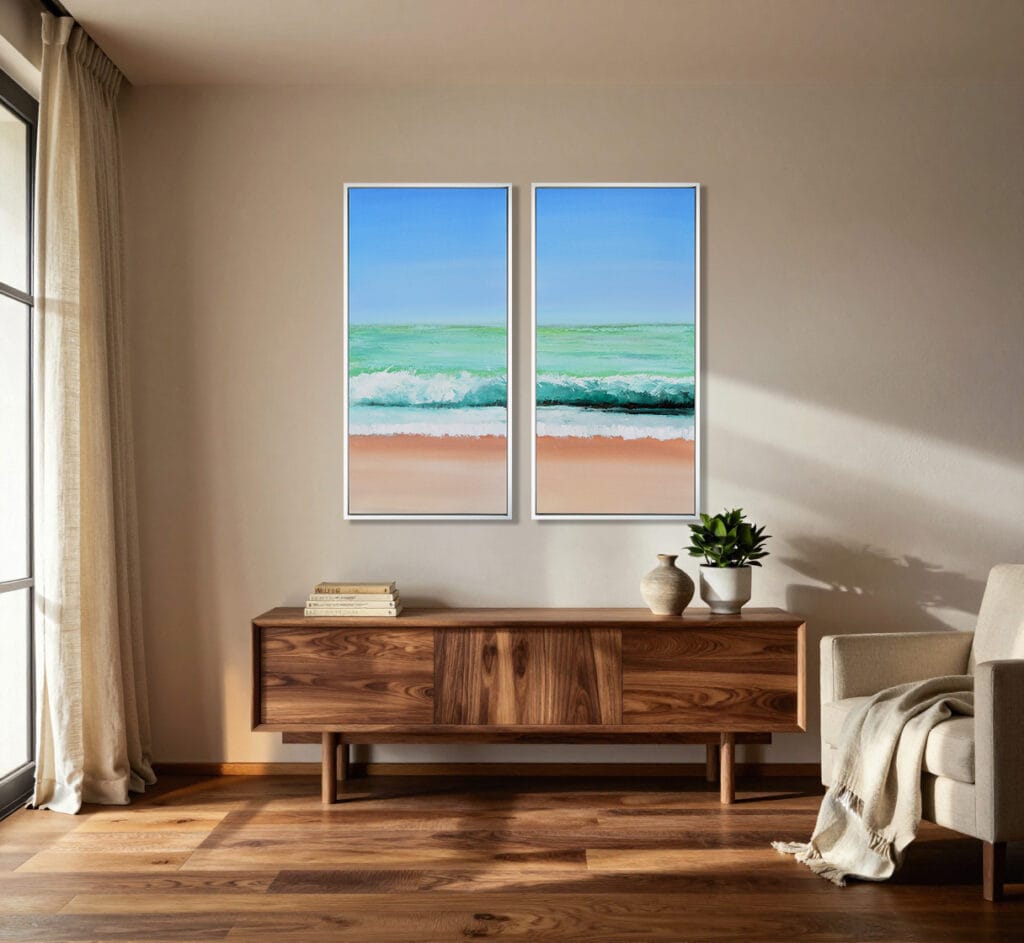
A living room where furniture and wall space create a clear relationship of scale.
Studio Notes · Principle Four

Scale as relationship.

A piece is not large or small by itself. It becomes large or small in conversation with what lives around it.

A quiet field note from Bonum Art Gallery

Scale is not a measurement. It is a relationship.

Principle

The size of a piece is decided by what surrounds it.

A work of art is rarely too large or too small in isolation.

It becomes too large when it overwhelms the furniture, compresses the wall, or leaves the room feeling visually crowded.

It becomes too small when it floats without purpose, loses contact with the objects below it, or makes the wall feel unfinished.

Scale is the conversation between the piece and the room.

This is why the same artwork can feel generous in one room and timid in another. The piece has not changed. The relationships around it have.

A sofa gives scale. A console gives scale. A bed, a chair, a window, a lamp, a doorway, and even the empty space around the work all participate in the decision.

The wall is not asking, “How big is the art?”

The wall is asking, “How does this piece belong to what is already here?”

A living room showing the relationship between furniture height, wall space, and visual weight.
A sofa and wall art arranged with quiet proportion and visual balance.
Observation

A room feels resolved when the artwork belongs to the furniture below it.

One of the most common mistakes in a room is treating the artwork and the furniture as separate decisions.

A piece is chosen for the wall. A sofa is chosen for the floor. A lamp is placed nearby. A console is added later. Each decision may be beautiful by itself, but the room can still feel unresolved if the relationships are weak.

The better questions are:

Does the artwork visually belong to what is beneath it?

Does it feel connected, or does it float?

Is the empty space helping the piece, or isolating it?

Over a sofa, the artwork needs enough width to feel intentional. Over a console, it needs enough presence to complete the vertical composition. In a narrow corner, it may need restraint rather than size.

Sometimes one large piece is calmer than three small ones.

Sometimes two smaller pieces create better rhythm than one forced statement.

The goal is not to fill the wall. The goal is to complete the relationship.

When scale is right, the room does not feel decorated. It feels held together.

Try this

Read the furniture before you choose the size.

Before deciding that a piece is too small, too large, or just right, study what it must relate to. These five quiet steps help you understand scale as a living relationship.

i

Start with what sits below.

Look at the sofa, console, bed, chair, or object beneath the wall. The artwork should not feel detached from the foundation of the room.

ii

Notice the width relationship.

Ask whether the piece feels too narrow, too wide, or comfortably related to what supports it visually. The width often decides whether the wall feels resolved.

iii

Watch the empty space.

Empty space should frame the piece, not abandon it. If the space around the work feels accidental, the scale may need to change.

iv

Compare one piece with a pair.

Sometimes a single large work brings calm. Sometimes a pair or series creates rhythm. Let the room tell you whether it needs presence or movement.

v

Step back until the room becomes one image.

Do not judge the artwork from the wall. Step back until you can see the furniture, the wall, the art, and the empty space together. If the room reads as one calm composition, the scale is close.

A well-scaled piece does not simply occupy space. It completes the room’s conversation.

Scale is the art of belonging. Not the art of filling.

A room becomes calmer when every object understands its relationship to the others. The artwork does not have to dominate the wall to matter. It has to belong to the life around it. When scale is right, the piece, the furniture, and the space between them begin to feel like one decision.

A quiet interior with intentional empty space and visual calm.
Next note

Silence as part of the work.

Why not every wall asks to be filled — and how empty space can become part of the room’s emotional composition.

Read next →
Photography

Images sourced from Pexels and Unsplash, edited for the Bonum Studio editorial experience.