The line your eye looks for — and the measure that finds it.

There’s a number people reach for when they hang art — a fixed height off the floor. It works in galleries, where everyone is standing. At home, where you mostly sit, it can leave a piece floating too high.
Your eye looks for a piece at the level where it naturally rests, and that level depends on how the room is used. A wall you pass standing wants one height; a wall you face from the sofa wants another, lower one.
The piece should meet your gaze where the room actually puts it.
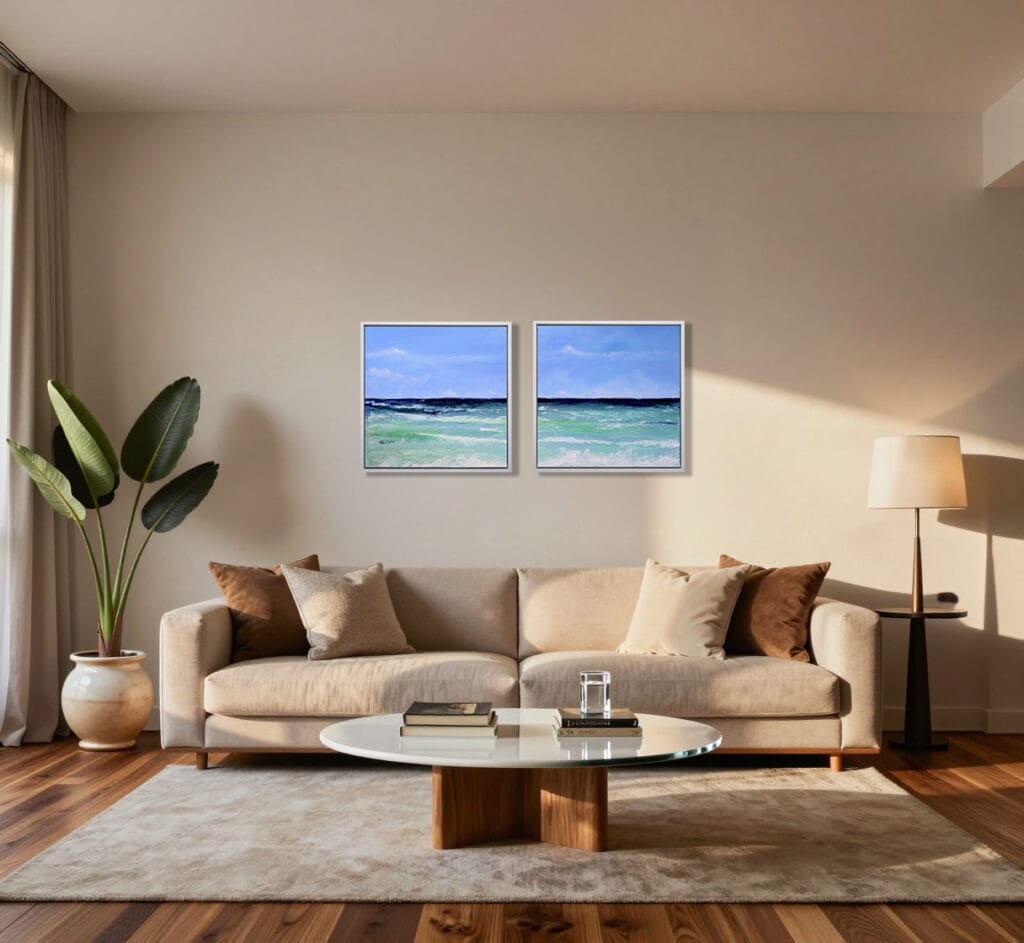
Galleries hang to a standing eye line because visitors walk through. A living room isn’t a gallery — you sink into it. Hung to the gallery rule, a piece above a low sofa drifts up out of view, and the wall beneath it goes empty.
The body, not the tape, knows where the work belongs.
In your home
Find your eye line
in the seat you actually use.
The right height isn’t measured from the floor — it’s measured from your eyes.
Hang it where the body looks, in the place you actually live, and the piece settles in.
With care Bonum Studio