
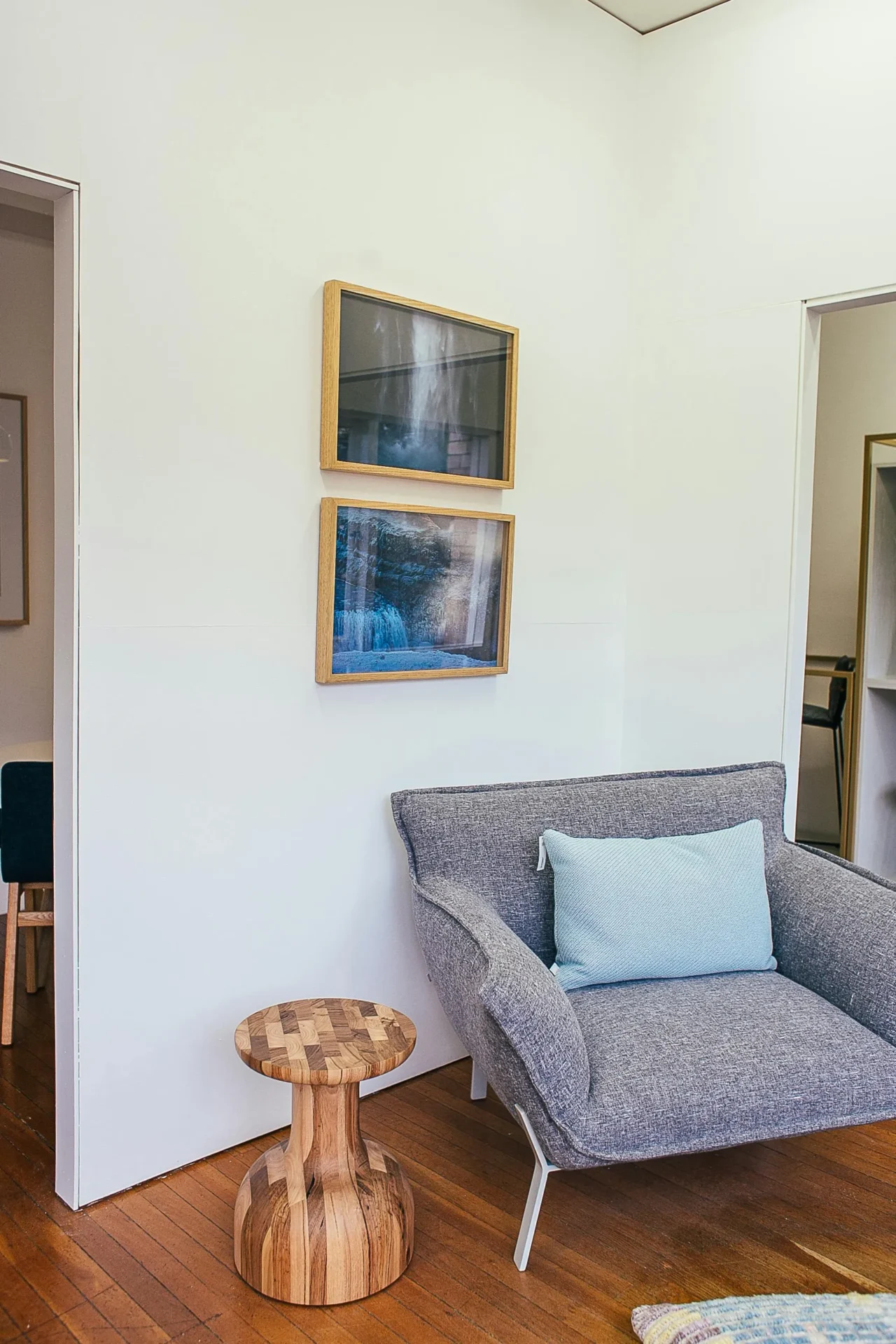
Silence as part of the work.
What you leave empty is part of the composition. Not every wall asks to be filled.
Silence is not emptiness. It is room for the eye to rest.
The empty space around a piece is part of the piece.
A wall does not become better because it holds more.
In many rooms, the most important decision is not what to add, but what to leave alone. A piece needs air around it. The wall needs breathing room. The eye needs a place to pause before it is asked to look again.
Silence is not the absence of design. It is a design decision.
When every surface is filled, nothing has time to arrive. The room may contain beautiful objects, but the body experiences them as visual noise.
A quiet wall can make one small piece feel precious. A soft corner can let a chair become an invitation. A generous margin around artwork can give the work dignity and presence.
The room is not asking to be completed by quantity.
It is asking to be composed with restraint.
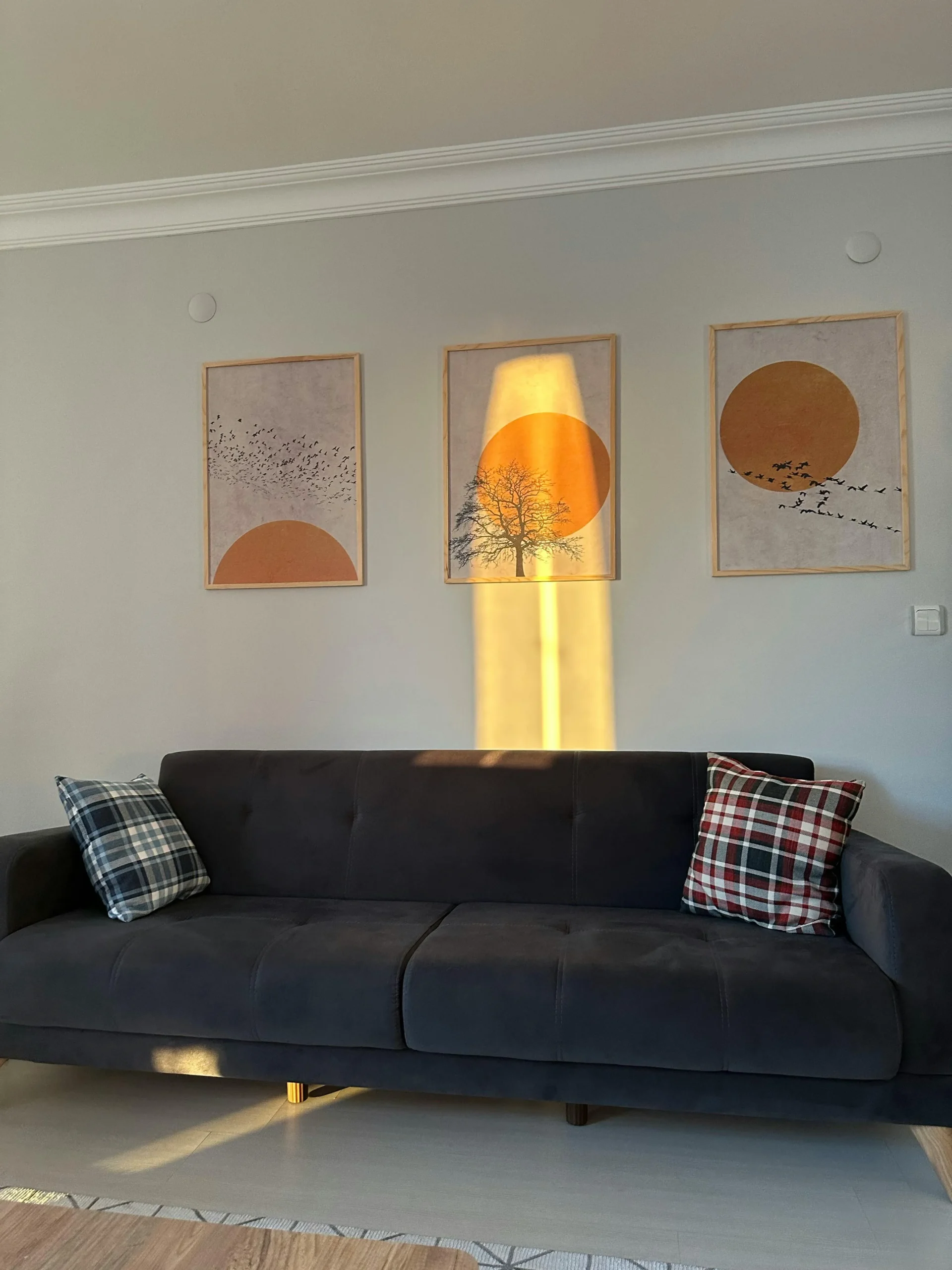
A room becomes calmer when not everything asks to be seen.
Visual calm depends on hierarchy. Some things should lead. Some things should support. Some things should stay quiet.
If every wall has the same importance, the room loses its rhythm. If every object asks for attention, the eye has nowhere to rest.
The better questions are:
Where should the eye pause?
What wall should remain quiet?
Is this space supporting the work, or competing with it?
Silence is especially important in homes meant to feel like refuge. A refuge does not overwhelm the senses. It allows the person entering to recover from the noise outside.
This does not mean a room must be minimal. It means the room must know when to stop speaking.
Empty space can be generous. Empty space can be elegant. Empty space can be emotional.
When silence is used well, the artwork becomes more visible, the furniture feels more intentional, and the room begins to breathe.
Remove before you add.
Before filling a wall, give the room a chance to speak with less. These five quiet steps help you understand when silence is doing useful work.
Choose one wall to leave quiet.
Not every surface needs a piece. Select one wall, corner, or margin that will serve as visual rest for the room.
Remove one object from the composition.
Take away the smallest extra thing first. Notice whether the room loses meaning or gains clarity.
Look at the space around the art.
Ask whether the empty space is framing the piece or simply leftover space. Intentional silence feels held, not forgotten.
Let one thing lead.
Decide what the room should notice first. Everything else should support that moment instead of competing with it.
Wait one day before adding anything back.
Live with the quieter version of the room for a full day. If the space feels calmer, more open, or more refined, the silence was not empty. It was working.
A room does not need to say everything at once to feel complete.
Silence gives the room dignity. And gives the artwork presence.
Empty space is not a failure to decorate. It is part of the emotional composition of a room. When silence is intentional, the eye rests, the body softens, and the few things that remain become more meaningful. A refuge is not made by filling every surface. It is made by knowing what deserves to stay quiet.
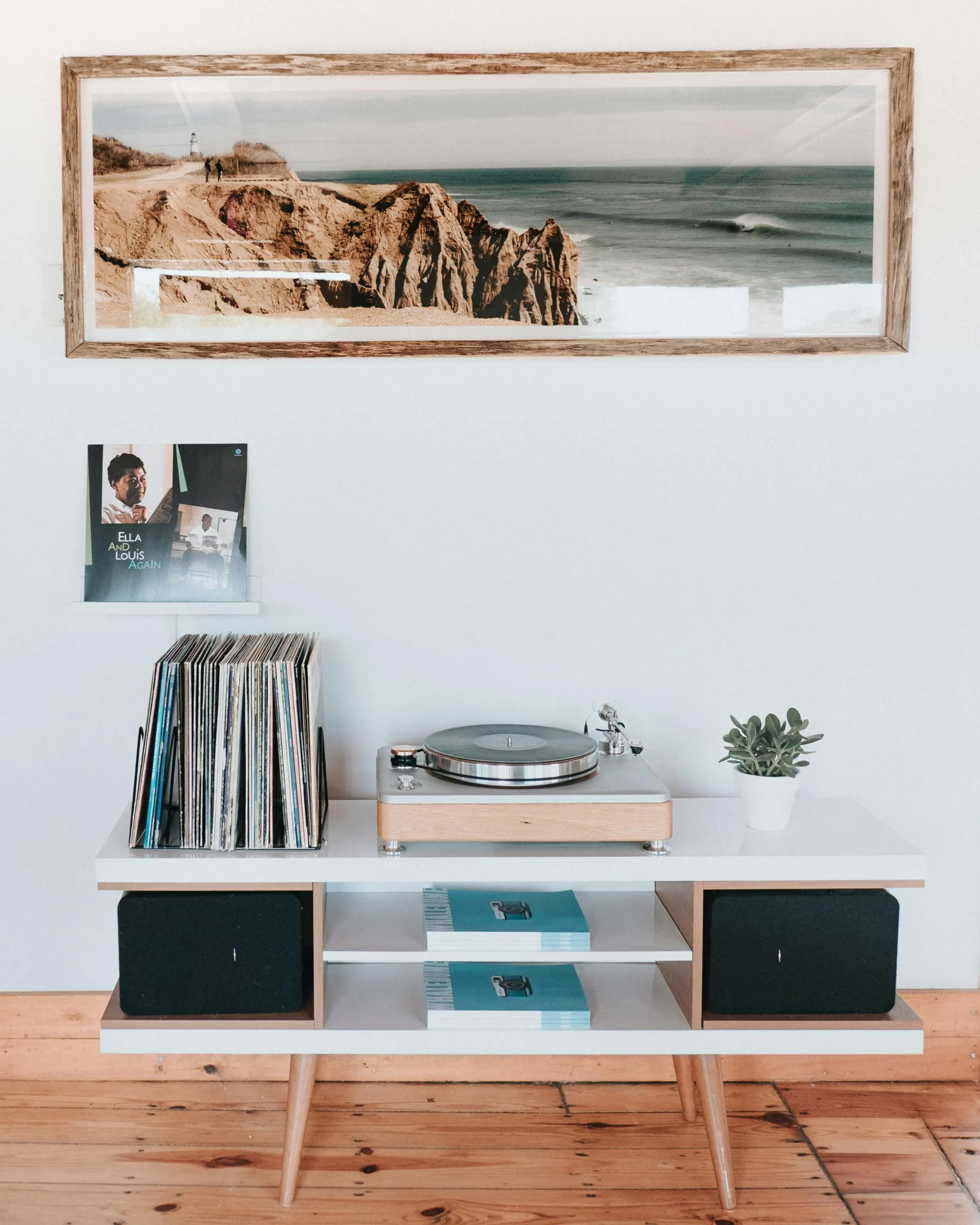
Inhabiting in layers.
Why a refuge is not created all at once — and how a home gains meaning through time, memory, objects, art, and daily rituals.
Read next →Images sourced from Pexels and Unsplash, edited for the Bonum Studio editorial experience.